Saturday, March 26, 2022

Binding Reference Of Type Discards Qualifiers

The declareQueue method takes a Queue object and returns the name of the declared queue. If the name property of the provided Queue is an empty String, the broker declares the queue with a generated name. That name is also added to the actualName property of the Queue. You can use this functionality programmatically only by invoking the RabbitAdmin directly.

binding reference of type discards qualifiers - The declareQueue method takes a Queue object and returns the name of the declared queue

When using auto-declaration by the admin when defining a queue declaratively in the application context, you can set the name property to "" . Starting with version 2.1, listener containers can use queues of this type. See Containers and Broker-Named queues for more information. When the async result is completed with an error, whether the message is requeued or not depends on the exception type thrown, the container configuration, and the container error handler. By default, the message will be requeued, unless the container's defaultRequeueRejected property is set to false . If the async result is completed with an AmqpRejectAndDontRequeueException, the message will not be requeued.

binding reference of type discards qualifiers - If the name property of the provided Queue is an empty String

If the container's defaultRequeueRejected property is false, you can override that by setting the future's exception to a ImmediateRequeueException and the message will be requeued. This command enables the advertisement of the unknown-mac-route in BGP. This will be coded in an EVPN mac route where the mac address is zero and the mac address length 48. The RabbitListenerTestHarness enhances the listener in two ways. First, it wraps the listener in a Mockito Spy, enabling normal Mockito stubbing and verification operations. It can also add an Advice to the listener, enabling access to the arguments, result, and any exceptions that are thrown.

binding reference of type discards qualifiers - That name is also added to the actualName property of the Queue

You can control which of these are enabled with attributes on the @RabbitListenerTest. The latter is provided for access to lower-level data about the invocation. It also supports blocking the test thread until the async listener is called. However, there is a class of errors where the listener cannot control the behavior. When a message that cannot be converted is encountered , some exceptions are thrown before the message reaches user code. With defaultRequeueRejected set to true , such messages would be redelivered over and over.

binding reference of type discards qualifiers - You can use this functionality programmatically only by invoking the RabbitAdmin directly

Before version 1.3.2, users needed to write a custom ErrorHandler, as discussed in Exception Handling, to avoid this situation. Specifies a tagging spoke SDP under an ETREE VPLS. When a tag SDP binding is required, it is created with a root-leaf-tag flag. The root-leaf-tag parameter indicates this SDP binding is a tag SDP that will use a default VID tag of 1 for root and 2 for leaf. The SDP binding tags egress E-Tree traffic with root and leaf VIDs as appropriate.

binding reference of type discards qualifiers - When using auto-declaration by the admin when defining a queue declaratively in the application context

Root and leaf VIDs are only significant between peering VPLS but the values must be consistent on each end. On ingress a tag SDP binding removes the VID tag on the interface between VPLS in the same ETREE service. The tag SDP receives root tagged traffic and marks the traffic with a root indication internally.

binding reference of type discards qualifiers - Starting with version 2

This option is not available on BGP EVPN-enabled ETREE services. Specifies a tagging mesh SDP under an ETREE VPLS. When a tag SDP binding is required, it is created with a root-leaf-tag flag. The root-leaf-tag parameter indicates this SDP binding is a tag SDP that will use a default VID 1 for root and 2 for leaf. The existing support in MessageListenerAdapter already lets your method have a non-void return type.

binding reference of type discards qualifiers - See Containers and Broker-Named queues for more information

You can set that default address by using the @SendTo annotation of the messaging abstraction. In function In foo (), a function called a right value reference is called as a parameter. In function bar_ Function object defined by lambda in bar() FunF, capture a right value by reference, and access the modified object in lambda. The lambda as bar_ The function object generated by the bar() function. Call in foo () bar_ Bar() is passed into the temporary object defined on the function stack Stra, and will bar_ The function object returned by bar () is returned as the return value.

binding reference of type discards qualifiers - When the async result is completed with an error

Stay In the main() function Funcg receive The foo() function returns the function object and calls the Funcg, crash or garbled code will occur. A constant expression can contain code blocks that may internally use all Nim features supported at compile time . Within such a code block, it is possible to declare variables and then later read and update them, or declare variables and pass them to procedures that modify them. However, the code in such a block must still adhere to the restrictions listed above for referencing values and operations outside the block. When you use Java configuration, the Queue.X_QUEUE_LEADER_LOCATOR argument is supported as a first class property through the setLeaderLocator() method on the Queue class.

binding reference of type discards qualifiers - By default

Starting with version 2.1, anonymous queues are declared with this property set to client-local by default. This ensures that the queue is declared on the node the application is connected to. By default, if the request message cannot be delivered, the calling thread eventually times out and a RemoteProxyFailureException is thrown.

binding reference of type discards qualifiers - If the async result is completed with an AmqpRejectAndDontRequeueException

You can modify that duration by setting the replyTimeout property on the RabbitTemplate. Starting with version 1.5, by setting the mandatory property to true and enabling returns on the connection factory , the calling thread throws an AmqpMessageReturnedException. By default, the send and receive methods timeout after five seconds and return null. You can modify this behavior by setting the replyTimeout property. This exception has returnedMessage, replyCode, and replyText properties, as well as the exchange and routingKey used for the send.

binding reference of type discards qualifiers - If the containers defaultRequeueRejected property is false

By default, the inferred type information will override the inbound TypeId and related headers created by the sending system. This lets the receiving system automatically convert to a different domain object. This applies only if the parameter type is concrete or it is from the java.utilpackage. In all other cases, the TypeId and related headers is used. There are cases where you might wish to override the default behavior and always use the TypeId information. For example, suppose you have a @RabbitListener that takes a Thing1 argument but the message contains a Thing2 that is a subclass of Thing1 .

binding reference of type discards qualifiers - This command enables the advertisement of the unknown-mac-route in BGP

To handle this situation, set the TypePrecedence property on the Jackson2JsonMessageConverter to TYPE_ID instead of the default INFERRED. You can subclass the adapter and provide an implementation of getListenerMethodName() to dynamically select different methods based on the message. This method has two parameters, originalMessage and extractedMessage, the latter being the result of any conversion. See SimpleMessageConverter for more information and information about other converters available. The CachingConnectionFactory uses an instance of the Rabbit client ConnectionFactory. A number of configuration properties are passed through when setting the equivalent property on the CachingConnectionFactory.

binding reference of type discards qualifiers - This will be coded in an EVPN mac route where the mac address is zero and the mac address length 48

To set other properties , you can define an instance of the Rabbit factory and provide a reference to it by using the appropriate constructor of the CachingConnectionFactory. When using the namespace , you need to provide a reference to the configured factory in the connection-factory attribute. For convenience, a factory bean is provided to assist in configuring the connection factory in a Spring application context, as discussed in the next section. Data unpacking builtin functions can be used to decode values in data formats that do not correspond directly to types in WGSL. This enables a program to read many densely packed values from memory, which can reduce a shader's memory bandwidth demand.

binding reference of type discards qualifiers - The RabbitListenerTestHarness enhances the listener in two ways

All module scope variables that are statically accessed by functions in the shader stage, and which are in address spaces uniform, storage, or handle. If a deployment validation fails and the development mode is enabled a simple HTML report is generated. The report contains a lot of useful information such as Weld version, list of enabled beans, list of bean archives, Weld configuration, etc. By default, the report is generated to the user's current working directory, ie. However, it is also possible to specify a path to the target directory using the org.jboss.weld.probe.exportDataAfterDeployment configuration property - see alsoDevelopment Mode.
binding reference of type discards qualifiers - First

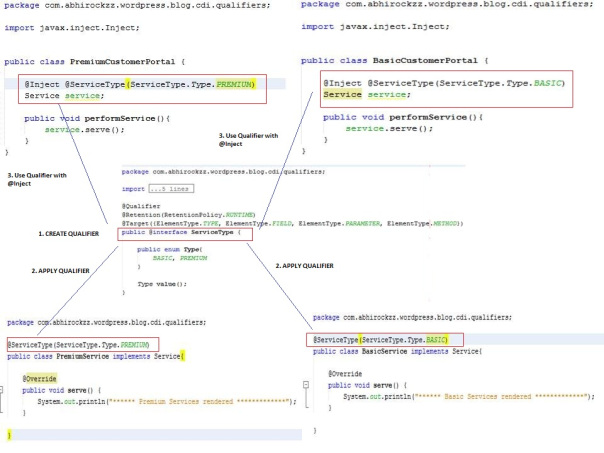
What's even more powerful is that CDI provides all these facilities in a typesafe way. CDI never relies on string-based identifiers to determine how collaborating objects fit together. Usage of XML descriptors is minimized to truly deployment-specific information. Member functions may also sometimes return a variable or object by reference or return a reference to a constant variable. This is most commonly done if the member function either returns the object that called it, returns a function parameter that is itself a reference, or returns a data member that is an object. For load-balancing options that can also be enabled on the system level, the options enabled on the interface level overwrite system level configurations.

binding reference of type discards qualifiers - It can also add an Advice to the listener

Open the ProducerConfiguration class and notice that it creates a connectionFactory and a rabbitTemplate bean. This time, since the configuration is dedicated to the message sending side, we do not even need any queue definitions, and the RabbitTemplate has only the 'routingKey' property set. Recall that messages are sent to an exchange rather than being sent directly to a queue. The AMQP default exchange is a direct exchange with no name.

binding reference of type discards qualifiers - You can control which of these are enabled with attributes on the RabbitListenerTest

All queues are bound to that default exchange with their name as the routing key. That is why we only need to provide the routing key here. In the preceding example, the AmqpTemplate bean is retrieved and used for sending a Message. Since the client code should rely on interfaces whenever possible, the type is AmqpTemplate rather than RabbitTemplate. Even though the bean created in HelloWorldConfiguration is an instance of RabbitTemplate, relying on the interface means that this code is more portable .

binding reference of type discards qualifiers - The latter is provided for access to lower-level data about the invocation

Since the convertAndSend() method is invoked, the template delegates to its MessageConverter instance. In this case, it uses the default SimpleMessageConverter, but a different implementation could be provided to the rabbitTemplate bean, as defined in HelloWorldConfiguration. Starting with version 2.2.2, the RabbitAdmin will detect beans of type DeclarableCustomizer and apply the function before actually processing the declaration. This is useful, for example, to set a new argument before it has first class support within the framework. Starting with version 2.1.9, messages with these fatal exceptions are rejected and NOT requeued by default, even if the container acknowledge mode is MANUAL. These exceptions generally occur before the listener is invoked so the listener does not have a chance to ack or nack the message so it remained in the queue in an un-acked state.

binding reference of type discards qualifiers - It also supports blocking the test thread until the async listener is called

To revert to the previous behavior, set the rejectManual property on the ConditionalRejectingErrorHandler to false. In addition, the ListenerExecutionFailedException now has a failedMessage property that you can use in the decision. If the FatalExceptionStrategy.isFatal() method returns true, the error handler throws an AmqpRejectAndDontRequeueException. The default FatalExceptionStrategy logs a warning message when an exception is determined to be fatal. When receiving batched messages one-at-a-time, the last message contains a boolean header set to true. This header can be obtained by adding the @Header(AmqpHeaders.LAST_IN_BATCH) boolean last` parameter to your listener method.

binding reference of type discards qualifiers - However

The header is mapped from MessageProperties.isLastInBatch(). In addition, AmqpHeaders.BATCH_SIZE is populated with the size of the batch in every message fragment. Starting with version 2.2.18, if a message conversion exception is thrown, the error handler will be called, with null in the message argument. This allows the application to send some result to the caller, indicating that a badly-formed message was received. Previously, such errors were thrown and handled by the container. By default, the infrastructure looks for a bean named rabbitListenerContainerFactory as the source for the factory to use to create message listener containers.
binding reference of type discards qualifiers - When a message that cannot be converted is encountered

In this case, and ignoring the RabbitMQ infrastructure setup, the processOrder method can be invoked with a core poll size of three threads and a maximum pool size of ten threads. Now that you have seen the various options for the Message-listening callback, we can turn our attention to the container. Basically, the container handles the "active" responsibilities so that the listener callback can remain passive. The container is an example of a "lifecycle" component.

binding reference of type discards qualifiers - With defaultRequeueRejected set to true

When configuring the container, you essentially bridge the gap between an AMQP Queue and the MessageListener instance. You must provide a reference to the ConnectionFactory and the queue names or Queue instances from which that listener should consume messages. In general, you should not use a RabbitAdmin with a template that has this set to true. Use the RabbitAdmin constructor that takes a connection factory. If you use the other constructor that takes a template, ensure the template's property is false.
binding reference of type discards qualifiers - Before version 1

This is because, often, an admin is used to declare queues for listener containers. Using a template that has the property set to true would mean that exclusive queues would be declared on a different connection to that used by listener containers. In that case, the queues cannot be used by the containers. Starting with version 2.0.2, you can set the usePublisherConnection property to true to use a different connection to that used by listener containers, when possible.

binding reference of type discards qualifiers

This is to avoid consumers being blocked when a producer is blocked for any reason. If the rabbit template is running in a transaction started by the listener container, the container's channel is used, regardless of this setting. Data packing builtin functions can be used to encode values using data formats that do not correspond directly to types in WGSL. This enables a program to write many densely packed values to memory, which can reduce a shader's memory bandwidth demand. Array_index The 0-based texture array index to sample. Level The mip level, with level 0 containing a full size version of the texture.

binding reference of type discards qualifiers - The root-leaf-tag parameter indicates this SDP binding is a tag SDP that will use a default VID tag of 1 for root and 2 for leaf

For the functions where level is a f32, fractional values may interpolate between two levels if the format is filterable according to the Texture Format Capabilities. Atomic types may only be instantiated by variables in the workgroup address space or by storage buffer variables with a read_write access mode. The memory scope of operations on the type is determined by the address space it is instantiated in. Atomic types in the workgroup address space have a memory scope of Workgroup, while those in the storage address space have a memory scope of QueueFamily. Function objects, that is, class objects which have the function call operator defined, can be used as target functions. In general, BLL cannot deduce the return type of an arbitrary function object.

binding reference of type discards qualifiers - The SDP binding tags egress E-Tree traffic with root and leaf VIDs as appropriate

However, there are two methods for giving BLL this capability for a certain function object class. Weld is capable of resolving observer methods for container lifecycle events in advance while bean deployer threads are blocked waiting for I/O operations . This process is called preloading and leads to better CPU utilization and faster application startup time. This configuration option specifies the number of threads used for preloading.

binding reference of type discards qualifiers - Root and leaf VIDs are only significant between peering VPLS but the values must be consistent on each end

This behaviour can be changed by setting a system property org.jboss.weld.se.archive.isolation to false or through the Weld.property() method. In this case, Weld will use a "flat" deployment structure - all bean classes share the same bean archive and all beans.xml descriptors are automatically merged into one. Thus alternatives, interceptors and decorators selected/enabled for a bean archive will be enabled for the whole application. We may obtain an instance of TextTranslator by injecting it into a constructor, method or field of a bean, or a field or method of a Java EE component class such as a servlet.

binding reference of type discards qualifiers - On ingress a tag SDP binding removes the VID tag on the interface between VPLS in the same ETREE service

The container chooses the object to be injected based on the type of the injection point, not the name of the field, method or parameter. Java EE 6 finally laid down that common definition in the Managed Beans specification. Managed Beans are defined as container-managed objects with minimal programming restrictions, otherwise known by the acronym POJO . They support a small set of basic services, such as resource injection, lifecycle callbacks and interceptors. Companion specifications, such as EJB and CDI, build on this basic model.

binding reference of type discards qualifiers - The tag SDP receives root tagged traffic and marks the traffic with a root indication internally

But, at last, there's a uniform concept of a bean and a lightweight component model that's aligned across the Java EE platform. For very large objects, passing by address is almost always faster than passing by value. For objects of modest size , it isn't always clear at the outset whether passing by address will actually be faster than passing by value. It depends on the target machine's architecture and what the function does with the parameter.

binding reference of type discards qualifiers - This option is not available on BGP EVPN-enabled ETREE services

Thursday, February 3, 2022

How To Find The Volume Of A Gas

The ideal gas law can be used to calculate the volume of gaseous products or reactants as needed. A gas collected in such a way is not pure, however, but contains a significant amount of water vapor. The measured pressure must therefore be corrected for the vapor pressure of water, which depends strongly on the temperature.

how to find the volume of a gas - The ideal gas law can be used to calculate the volume of gaseous products or reactants as needed

There are several steps involved in this calculation. First, we must determine the question, which is to calculate the volume of a quantity of gas at a given temperature and pressure. In a second step, after establishing a basis, we must convert the mass of methane that will be the basis into pound moles. Third, we must convert temperature in degrees Fahrenheit into absolute degrees Rankin and, fourth, convert pressure from psig into psia. Fifth, we must select the appropriate ideal gas constant and use it with a rewritten form of Equation 4.11 to determine the volume of 11.0 lbs of methane gas.

how to find the volume of a gas - A gas collected in such a way is not pure

Finally, we can substitute the values previously determined into the rewritten equation to calculate the volume. Eventually, these individual laws were combined into a single equation—the ideal gas law—that relates gas quantities for gases and is quite accurate for low pressures and moderate temperatures. We will consider the key developments in individual relationships , then put them together in the ideal gas law.

how to find the volume of a gas - The measured pressure must therefore be corrected for the vapor pressure of water

The behavior of gases can be described by several laws based on experimental observations of their properties. The pressure of a given amount of gas is directly proportional to its absolute temperature, provided that the volume does not change (Amontons's law). The volume of a given gas sample is directly proportional to its absolute temperature at constant pressure (Charles's law).

how to find the volume of a gas - There are several steps involved in this calculation

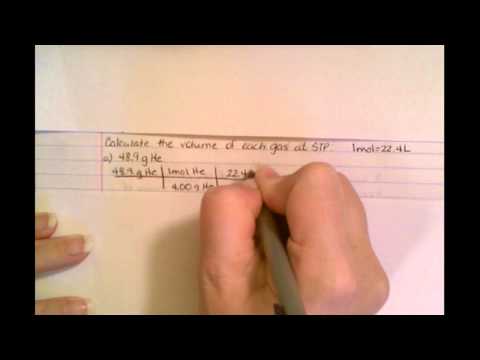
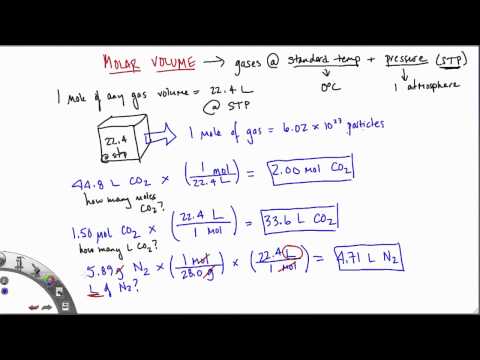
The volume of a given amount of gas is inversely proportional to its pressure when temperature is held constant (Boyle's law). Under the same conditions of temperature and pressure, equal volumes of all gases contain the same number of molecules (Avogadro's law). The ideal gas law specifies that the volume occupied by a gas depends upon the amount of substance as well as temperature and pressure. Standard temperature and pressure -- usually abbreviated by the acronym STP -- are 0 degrees Celsius and 1 atmosphere of pressure. Parameters of gases important for many calculations in chemistry and physics are usually calculated at STP. An example would be to calculate the volume that 56 g of nitrogen gas occupies.

how to find the volume of a gas - First

Previously, we considered only ideal gases, those that fit the assumptions of the ideal gas law. Gases, however, are never perfectly in the ideal state. When pressure is low and temperature is low, gases behave similarly to gases in the ideal state. When pressure and temperature increase, gases deviate farther from the ideal state. We have to assume new standards, and consider new variables to account for these changes.

how to find the volume of a gas - In a second step

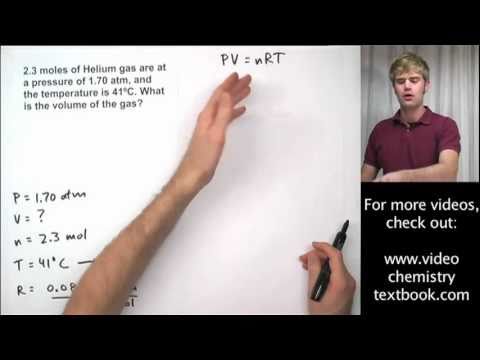
A common equation used to better represent a gas that is not near ideal conditions is the van der Waals equation, seen below. The ideal gas law formula states that pressure multiplied by volume is equal to moles times the universal gas constant times temperature. And is a proportionality constant that relates the values of pressure, volume, amount, and temperature of a gas sample.

how to find the volume of a gas - Third

The variables in this equation do not have the subscripts i and f to indicate an initial condition and a final condition. The ideal gas law relates the four independent properties of a gas under any conditions. Gases whose properties of P, V, and T are accurately described by the ideal gas law are said to exhibit ideal behavior or to approximate the traits of an ideal gas. An ideal gas is a hypothetical construct that may be used along with kinetic molecular theory to effectively explain the gas laws as will be described in a later module of this chapter.

how to find the volume of a gas - Fifth

Although all the calculations presented in this module assume ideal behavior, this assumption is only reasonable for gases under conditions of relatively low pressure and high temperature. In the final module of this chapter, a modified gas law will be introduced that accounts for the non-ideal behavior observed for many gases at relatively high pressures and low temperatures. This relationship between temperature and pressure is observed for any sample of gas confined to a constant volume. An example of experimental pressure-temperature data is shown for a sample of air under these conditions in Figure 9.11. In thermodynamics, the volume of a system is an important extensive parameter for describing its thermodynamic state. The specific volume, an intensive property, is the system's volume per unit of mass.

how to find the volume of a gas - Finally

Volume is a function of state and is interdependent with other thermodynamic properties such as pressure and temperature. For example, volume is related to the pressure and temperature of an ideal gas by the ideal gas law. We have just seen that the volume of a specified amount of a gas at constant pressure is proportional to the absolute temperature. In addition, we saw that the volume of a specified amount gas at a constant temperature is also inversely proportional to its pressure. We can correctly assume that pressure of a specified amount of gas at a constant volume is proportional to its absolute temperature. Let us also add the fact that the volume at constant pressure and temperature is also proportional to the amount of gas.

how to find the volume of a gas - Eventually

Similarly, the pressure at constant volume and temperature is proportional to the amount of gas. Thus, these laws and relationships can be combined to give Equation 4.10. Is the volume occupied by one mole of a chemical element or a chemical compound. It can be calculated by dividing the molar mass by mass density (ρ). Molar gas volume is one mole of any gas at a specific temperature and pressure has a fixed volume.

how to find the volume of a gas - We will consider the key developments in individual relationships

If a sample of gas has an initial pressure of 1.56 atm and an initial volume of 7.02 L, what is the final volume if the pressure is changed to 1,775 torr? Assume that the amount and the temperature of the gas remain constant. The volume and temperature are linearly related for 1 mole of methane gas at a constant pressure of 1 atm. If the temperature is in kelvin, volume and temperature are directly proportional. Charles's law states that the volume of a given amount of gas is directly proportional to its temperature on the kelvin scale when the pressure is held constant. This ideal gas law calculator will help you establish the properties of an ideal gas subject to pressure, temperature, or volume changes.

how to find the volume of a gas - The behavior of gases can be described by several laws based on experimental observations of their properties

Read on to learn about the characteristics of an ideal gas, how to use the ideal gas law equation, and the definition of the ideal gas constant. To apply this gas law, the amount of gas should remain constant. As with the other gas laws, the temperature must be expressed in kelvins, and the units on the similar quantities should be the same. Because of the dependence on three quantities at the same time, it is difficult to tell in advance what will happen to one property of a gas sample as two other properties change. The best way to know is to work it out mathematically. If a sample of gas has an initial pressure of 375 torr and an initial volume of 7.02 L, what is the final pressure if the volume is changed to 4,577 mL?

how to find the volume of a gas - The pressure of a given amount of gas is directly proportional to its absolute temperature

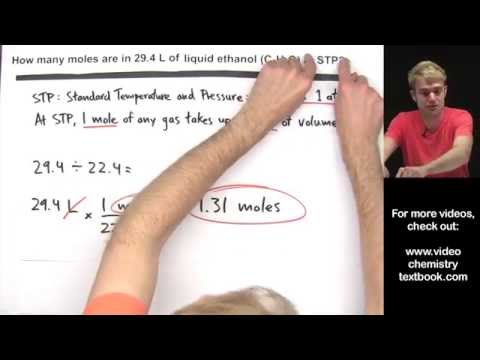
Assume that amount and the temperature of the gas remain constant. The molar volumes of all gases are the same when measured at the same temperature and pressure (22.4 L at STP), but the molar masses of different gases will almost always vary. Examples and practice problems of solving equation stoichiometry questions with gases. We calculate moles with 22.4 L at STP, and use molar mass and mole ratios to figure out how many products or reactants we have.

how to find the volume of a gas - The volume of a given gas sample is directly proportional to its absolute temperature at constant pressure Charless law

The ideal gas equation contains five terms, the gas constant R and the variable properties P, V, n, and T. Specifying any four of these terms will permit use of the ideal gas law to calculate the fifth term as demonstrated in the following example exercises. This means equal amounts of moles of gases occupy the same volume under the same conditions of temperature and pressure.

how to find the volume of a gas - The volume of a given amount of gas is inversely proportional to its pressure when temperature is held constant Boyles law

The volume of gas collected and the gas laws can be used to calculate the number of moles of gas collected. We can use the ideal gas equation to calculate the volume of 1 mole of an ideal gas at 0°C and 1 atmosphere pressure. Standard temperature and pressure is defined as 0oC (273.15K) and 1atm pressure.

how to find the volume of a gas - Under the same conditions of temperature and pressure

How To Find The Final Volume Of A Gas The molar volume of a gas is the volume of one mole of a gas at STP. At STP, one mole (6.02×10²³ representative particles) of any gas occupies a volume of 22.4L . This relationship shows us that if we increase the moles of gas, n, by adding more gas while maintaining the same temperature and pressure, the volume of gas, V, will also increase. Specific volume is defined as the number of cubic meters occupied by one kilogram of matter. It is the ratio of a material's volume to its mass, which is the same as the reciprocal of its density.

How To Find The Final Volume Of A Gas

In other words, specific volume is inversely proportional to density. Specific volume may be calculated or measured for any state of matter, but it is most often used in calculations involving gases. If a sample of gas has an initial pressure of 3.66 atm and an initial volume of 11.8 L, what is the final pressure if the volume is reduced to 5.09 L? If a sample of gas has an initial pressure of 1.56 atm and an initial volume of 7.02 L, what is the final volume if the pressure is reduced to 0.987 atm? Temperature is sometimes measured with a gas thermometer by observing the change in the volume of the gas as the temperature changes at constant pressure.

how to find the volume of a gas - Standard temperature and pressure -- usually abbreviated by the acronym STP -- are 0 degrees Celsius and 1 atmosphere of pressure

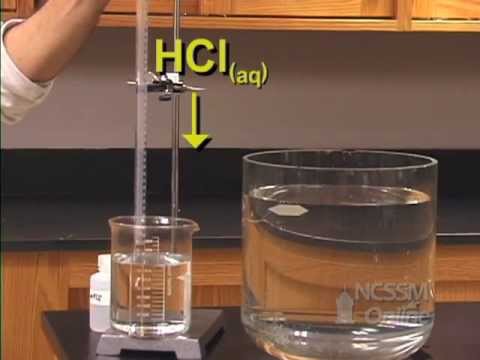
The hydrogen in a particular hydrogen gas thermometer has a volume of 150.0 cm3 when immersed in a mixture of ice and water (0.00 °C). When immersed in boiling liquid ammonia, the volume of the hydrogen, at the same pressure, is 131.7 cm3. Find the temperature of boiling ammonia on the kelvin and Celsius scales. Because the gas is less dense than liquid water, it bubbles to the top of the bottle, displacing the water. Eventually, all the water is forced out and the bottle contains only gas.

how to find the volume of a gas - Parameters of gases important for many calculations in chemistry and physics are usually calculated at STP

B Use the ideal gas law to determine the volume of O2 required under the given conditions. Be sure that all quantities are expressed in the appropriate units. To understand how the ideal gas equation and the stoichiometry of a reaction can be used to calculate the volume of gas produced or consumed in a reaction. Scientists and engineers have defined an ideal gas to be a gas with properties affected only by pressure and temperature. Thus, Equation 4.10 only needs a magical constant so that any one of its variables can be calculated if the other three are known.

how to find the volume of a gas - An example would be to calculate the volume that 56 g of nitrogen gas occupies

That constant is the ideal gas constant R and is used to form the Ideal Gas Law given by Equation 4.11. As we stated earlier, the shape of a gas is determined entirely by the container in which the gas is held. Sometimes, however, the container may have small holes, or leaks. Molecules will flow out of these leaks, in a process called effusion. Because massive molecules travel slower than lighter molecules, the rate of effusion is specific to each particular gas. We use Graham's law to represent the relationship between rates of effusion for two different molecules.

how to find the volume of a gas - Previously

This relationship is equal to the square-root of the inverse of the molecular masses of the two substances. Imagine filling a rigid container attached to a pressure gauge with gas and then sealing the container so that no gas may escape. If the container is cooled, the gas inside likewise gets colder and its pressure is observed to decrease. Since the container is rigid and tightly sealed, both the volume and number of moles of gas remain constant.

how to find the volume of a gas - Gases

If we heat the sphere, the gas inside gets hotter (Figure 9.10) and the pressure increases. 1 mole of an ideal gas occupies a specific volume at a particular temperature and pressure. The most common molar volume is the molar volume of an ideal gas at standard temperature and pressure (273 K and 1.00 atm). If the conditions are not at STP, a molar volume of 22.4 L/mol is not applicable. However, if the conditions are not at STP, the combined gas law can be used to calculate the volume of the gas at STP; then the 22.4 L/mol molar volume can be used. If a gas has an initial pressure of 24,650 Pa and an initial volume of 376 mL, what is the final volume if the pressure of the gas is changed to 775 torr?

how to find the volume of a gas - When pressure is low and temperature is low

Experience has shown that several properties of a gas can be related to each other under certain conditions. The properties are pressure , volume , temperature , and amount of material expressed in moles . What we find is that a sample of gas cannot have any random values for these properties. Instead, only certain values, dictated by some simple mathematical relationships, will occur. If we heat the sphere, the gas inside gets hotter and the pressure increases.

how to find the volume of a gas - When pressure and temperature increase

Under these conditions, the volume of the gas will vary inversely with the absolute pressure. This equation calculates a pressure given the corresponding elements of the equivalence; Initial pressure, Initial volume, and temperature. 1 mole of any gas occupies 22.4 dm3 at stp (standard temperature and pressure, taken as 0°C and 1 atmosphere pressure). You may also have used a value of 24.0 dm3 at room temperature and pressure (taken as about 20°C and 1 atmosphere). For a constant volume and amount of air, the pressure and temperature are directly proportional, provided the temperature is in kelvin. Likewise, the only way to decrease the volume of gas, V, while maintaining the same temperature and pressure, is to decrease the moles of gas, n, that are present, that is, remove some of the gas.

how to find the volume of a gas - We have to assume new standards

Likewise, if we decrease the moles of gas, n, by removing some of the gas while maintaining the same temperature and pressure, the volume of gas, V, will also decrease. Volume is the level at which something is heard or the amount of space a solid, liquid or gas occupies. With sound, its volume is the loudness of the sound. With a container, its volume would be its capacity, or how much it can hold. Volume is often expressed in cubic units determined by the International System of Units.

how to find the volume of a gas - A common equation used to better represent a gas that is not near ideal conditions is the van der Waals equation

A gas sample at 35°C has an initial volume of 5.06 L. What is its volume if the temperature is changed to −35°C? Assume that the pressure and the amount of the gas remain constant. A gas sample at 20°C has an initial volume of 20.0 L.

how to find the volume of a gas - The ideal gas law formula states that pressure multiplied by volume is equal to moles times the universal gas constant times temperature

What is its volume if the temperature is changed to 60°C? For the ideal gas equation, note that the product PV is directly proportional to T. Measurement of gas volume contributes to studies on reaction rates and commercial viability of chemical and biochemical processes in which a gas Is a by-product. Additionally measurement of volumes of vapours are also required for determination of molecular weights of volatile liquids by Victor – Meyer method. For example, the space that a substance or 3D shape occupies or contains.

how to find the volume of a gas - And is a proportionality constant that relates the values of pressure

Volume is often quantified numerically using the SI derived unit, the cubic metre. Volumes of some simple shapes, such as regular, straight-edged, and circular shapes can be easily calculated using arithmetic formulas. Volumes of complicated shapes can be calculated with integral calculus if a formula exists for the shape's boundary.

how to find the volume of a gas - The variables in this equation do not have the subscripts i and f to indicate an initial condition and a final condition

One-dimensional figures and two-dimensional shapes are assigned zero volume in the three-dimensional space. The preceding example was actually a simple problem that has been made more complicated here. The simple solution can provide an estimate for Step 13 of the problem-solving technique in Chapter 1, "Introductory Concepts," in which we judge our results. First, the cracking of ethane into ethylene with the hydrogen being given off doubles the number of moles of gas. Second, the increase of temperature, from 810°R (350°F) to 2,010°R (1,550°F), also more than doubles the volume.

how to find the volume of a gas - The ideal gas law relates the four independent properties of a gas under any conditions

Binding Reference Of Type Discards Qualifiers

The declareQueue method takes a Queue object and returns the name of the declared queue. If the name property of the provided Queue is an em...